
How to Waterproof Leather Work Boots
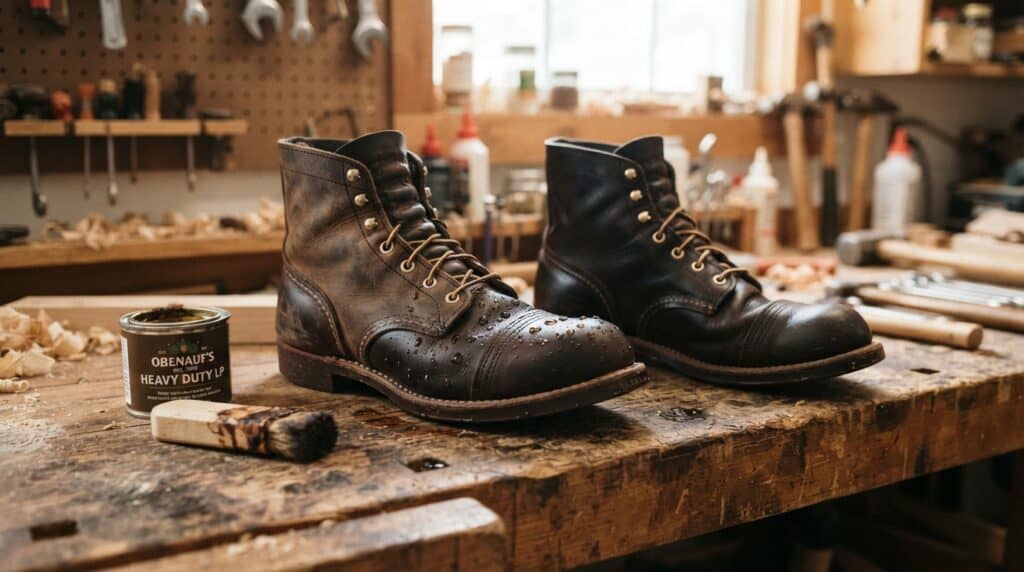
Clean boots thoroughly, let them dry fully, then apply a leather-appropriate waterproofing product (wax for maximum protection, cream or oil for conditioning plus water resistance, or silicone spray for quick, breathable reapplication) in thin, even layers, paying extra attention to seams and the welt line. Reapply every 4–6 weeks under heavy exposure, or every 2–3 months under regular outdoor use.
Even boots that come “waterproof” from the factory need maintenance — factory treatments wear down with flexing, abrasion, and sun exposure. Here’s how to keep leather boots genuinely water-resistant over time, not just on day one.
Step 1: Clean Before You Waterproof
Waterproofing products only work properly on clean leather. Dirt, salt residue, and mud block the treatment from absorbing.
- Remove laces and loosen the tongue
- Brush off loose dirt and debris with a stiff brush
- Wipe down with a damp cloth to remove remaining grime, or use a mild leather cleaner for stubborn dirt
- Let boots dry completely at room temperature — never use direct heat (a heater, radiator, or direct sun) to speed drying, since it can crack leather and warp soles or adhesives
Note: some wax-based products actually work better applied to slightly damp leather, since damp leather absorbs wax more evenly. Check your specific product’s instructions rather than assuming boots must be bone-dry first.
Step 2: Choose the Right Product for Your Leather
| Product type | Best for | Trade-offs |
|---|---|---|
| Wax (e.g., beeswax-based) | Full-grain leather, heavy wet/snow conditions | Strong, long-lasting barrier; can darken leather and affect future resoling adhesion |
| Cream/oil-based conditioner | Dry or cracking leather needing conditioning + water resistance at once | Should be used sparingly — over-oiling softens structural stiffness |
| Silicone or water-based spray | Quick, breathable reapplication; safe on membrane boots (Gore-Tex, etc.) | Generally shorter-lasting than wax; must not be used with wax-clogged membranes |
| Nubuck/suede-specific spray | Nubuck or suede uppers only | Regular wax or oil will ruin the texture — always use a product made specifically for these materials |
If your boots have a factory waterproof membrane (like Gore-Tex), don’t apply wax directly over the membrane areas — wax can clog the membrane’s breathability. Use a water-based DWR (durable water repellent) spray instead, and reserve wax for exposed leather-only areas.
Step 3: Apply Correctly
- Apply in thin, even layers rather than one heavy coat — heavy application can clog leather’s pores and reduce breathability
- Pay extra attention to seams, the welt line, and stitching — these are the most common points where water gets in first, and they’re the areas people skip most often
- Let each coat absorb fully (usually 15–30 minutes) before adding another if needed
- Buff off any excess with a clean cloth
- Let boots cure for several hours, ideally overnight, before wearing them in wet conditions
Step 4: Know How Often to Reapply
- Heavy daily exposure to mud, snow, or standing water: every 4–6 weeks
- Regular outdoor use with occasional wet conditions: every 2–3 months
- Mostly indoor or light exposure: every 4–6 months, or whenever water stops beading
The bead test: Pour a small amount of water on the leather. If it beads up and rolls off, the waterproofing is still active. If it soaks in or visibly darkens the leather, it’s time to reapply.
Don’t Forget the Seams and Laces
Waterproofing sprays and waxes often get applied only to the flat leather panels, but water frequently gets in through:
- The tongue gusset (the fabric or leather fold under the laces)
- Seams where leather panels are stitched together
- The welt line where the sole meets the upper
Treat these areas specifically and deliberately — they’re the actual failure points, not the flat panels most people focus on.
What Waterproofing Won’t Fix
If water is getting in through a cracked sole, a separated welt, or a hole in the material, no amount of spray or wax will solve it — that’s a repair or resole issue, not a maintenance one. Waterproofing treatments extend the life of intact waterproofing; they don’t restore a boot whose structure is already compromised. See our lifespan and replacement guides if you’re seeing structural water intrusion rather than surface wear.
Waterproofing New Boots Before First Use
Even brand-new “waterproof” boots benefit from an initial treatment before heavy use, especially at seams and the welt line, since factory treatments are applied for shipping condition rather than long-term daily wear. Treating new boots before their first wet-weather use, rather than waiting for the factory coating to fail, extends the interval before your first reapplication is needed.
Also Check Out Our These Guides
FAQ
How often should I waterproof my leather work boots?
Every 4–6 weeks under heavy daily wet exposure, every 2–3 months for regular outdoor use, or whenever the water-bead test shows the leather is starting to absorb water instead of shedding it.
Can I use wax on Gore-Tex or membrane boots?
Avoid applying wax directly to membrane-lined areas — it can clog the membrane and reduce breathability. Use a water-based DWR spray on membrane boots instead, reserving wax for exposed leather-only sections.
Does waterproofing wax darken leather?
Yes, most wax-based treatments will darken leather somewhat, more so than silicone or water-based sprays. If color matters to you, test on a small area first or choose a spray-based product.
Is it safe to use WD-40 to waterproof boots?
It’s sometimes used as a temporary fix, but it’s not a real long-term waterproofing solution, doesn’t condition leather, and can affect breathability. A dedicated leather waterproofing product is a better choice.
Do new waterproof boots need to be treated before wearing them?
Yes — even factory-waterproofed boots benefit from an initial treatment at the seams and welt line before heavy wet-weather use, since factory coatings aren’t optimized for long-term daily wear.