How Should Work Boots Fit?
Quick answer: A properly fitting work boot has about a thumb’s width of space between your longest toe and the front of the boot, a heel that stays snug with minimal lift when walking, comfortable width at the ball of the foot with no pinching, and an arch that lines up with your foot’s natural arch. Try boots on later in the day, wearing your actual work socks.
Wrong fit doesn’t just feel uncomfortable — it causes blisters, black toenails, plantar fasciitis flare-ups, and over months of daily wear, real long-term foot problems. Here’s what correct fit actually looks like, checked five ways.
The Five-Point Fit Check
1. Toe Room
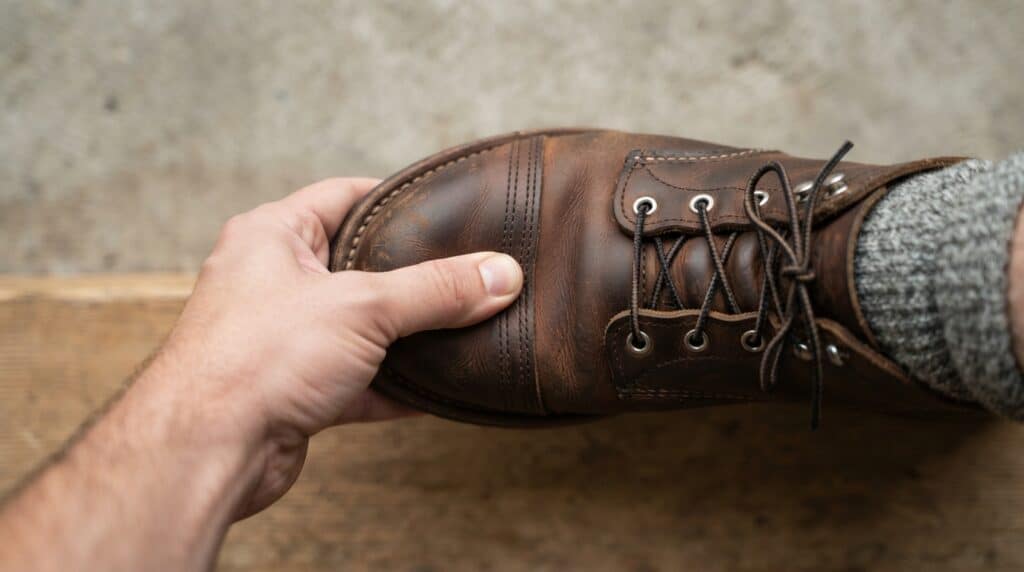
About a thumb’s width of space between your longest toe and the boot’s end. Enough that toes can move freely, not so much that your foot slides forward on inclines or stairs. Never size down to fix a width problem — that only compresses the toe box.
2. Heel Hold
Your heel should stay secure with minimal lift as you walk. Some slight movement is normal in new, unbroken-in boots, but persistent slipping (more than about a quarter inch) usually signals the boot is too large or the ankle fit is too loose, not a break-in issue that will resolve on its own.
3. Width
Your foot shouldn’t feel pinched at the widest part (the ball of the foot), and there shouldn’t be dead space on the sides either. If you’ve had recurring width problems in regular shoes, check whether the brand offers wide options (E, EE, EEE) before assuming a longer size will fix it — going up a full size to solve a width problem usually creates a new length problem.
4. Arch
The boot’s built-in arch support should roughly match your foot’s natural arch position. A mismatch here is a common, underrated cause of end-of-day fatigue that people often blame on “bad boots” when it’s actually a sizing issue.
5. Flex Point
The boot should bend naturally where your foot bends — at the ball of the foot, not further back or forward. A mismatched flex point creates unnecessary stress on both your foot and the boot’s structure over time.
Why Work Boots Fit Differently Than Sneakers
A lot of buyers order their usual sneaker size and are surprised when it’s wrong. A few real reasons:
- Leather stretches with wear — a snug break-in fit becomes comfortable, while “comfortable out of the box” can become loose and unstable within weeks
- Steel and composite toe boxes are shaped differently than athletic shoes and typically need slightly more room to avoid toe pressure
- Work boots are usually worn with thicker socks than sneakers, which changes true sizing
- Sizing varies by brand — many run a half size larger or smaller than standard, so always check brand-specific sizing charts rather than relying on your usual number
Socks Matter More Than People Expect
Always try boots on with the actual socks you’ll wear on the job — thick wool or work-specific socks, not thin dress socks. Sizing around the wrong sock thickness is one of the most common and avoidable fit mistakes, and it’s invisible until you’re several hours into a shift.
Signs Your Boots Don't Fit — Even If They Seem Okay at First
- Numbness or tingling in the toes after a few hours
- Heel blisters that keep recurring in the exact same spot
- Your foot sliding forward enough to hit the front on stairs or inclines
- Pain that’s worse at the end of the day than the beginning — often a sign of insufficient arch support, not just normal fatigue
- One foot fitting noticeably differently than the other — very common, and worth sizing to your larger foot
Break-In Expectations vs. Genuine Fit Problems
Some tightness in the first one to two weeks of wearing new leather boots is normal and usually eases as the leather softens (see our break-in guide for the full process). But if you’re still experiencing sharp, specific pain, numbness, or recurring blisters after two weeks of gradual, proper break-in, that’s a sizing or width problem — not something more time will fix.
Buying Online Without Trying On First
If you’re ordering online:
- Use the brand’s specific sizing chart rather than assuming standard US sizing carries over
- Read reviews that specifically mention “runs small,” “runs large,” or “true to size” — one of the most useful things real owner reviews tell you that a spec sheet never will
- Buy from a retailer with a genuine return policy for lightly worn boots, since fit problems often only reveal themselves after a few real hours of wear, not a five-minute try-on.
Fit by Foot Type
- Wide feet: Look for E/EE/EEE width options specifically, rather than sizing up in standard width.
- Narrow feet: Consider lacing techniques (like a heel-lock lace pattern) to remove excess volume around the ankle before assuming you need a narrow-specific model.
- High arches: Prioritize boots with a supportive, non-collapsing footbed and consider aftermarket arch-support insoles if the stock insole feels flat.
- Flat feet / plantar fasciitis: Look for boots with rigid shanks and structured arch support built into the midsole, not just a cushioned insole.
FAQ
How much toe room should work boots have?
About a thumb’s width between your longest toe and the front of the boot — enough for natural movement and swelling throughout the day, without letting the foot slide forward.
Is some heel slip normal in new work boots?
A small amount of heel movement is normal before break-in and typically decreases as the boot’s forefoot flexes to your stride. Heel slip beyond about a quarter inch, or slip that doesn’t improve after normal break-in, usually means the boot is too large.
Should I size up if my toes feel cramped?
Not necessarily — cramped toes are often a width problem, not a length problem. Try a wide-width version of your correct length before sizing up, since sizing up to fix width usually creates heel slip instead.
Do work boots stretch over time?
Leather uppers do stretch and mold to your foot with wear, but a well-constructed toe box generally doesn’t stretch meaningfully — don’t buy a boot expecting the toe box to loosen significantly over time.
What's the best time of day to try on work boots?
Later in the day, when feet are naturally more swollen from normal daily activity, gives a more accurate sense of all-day fit than trying boots on first thing in the morning.