
How to Choose Work Boots
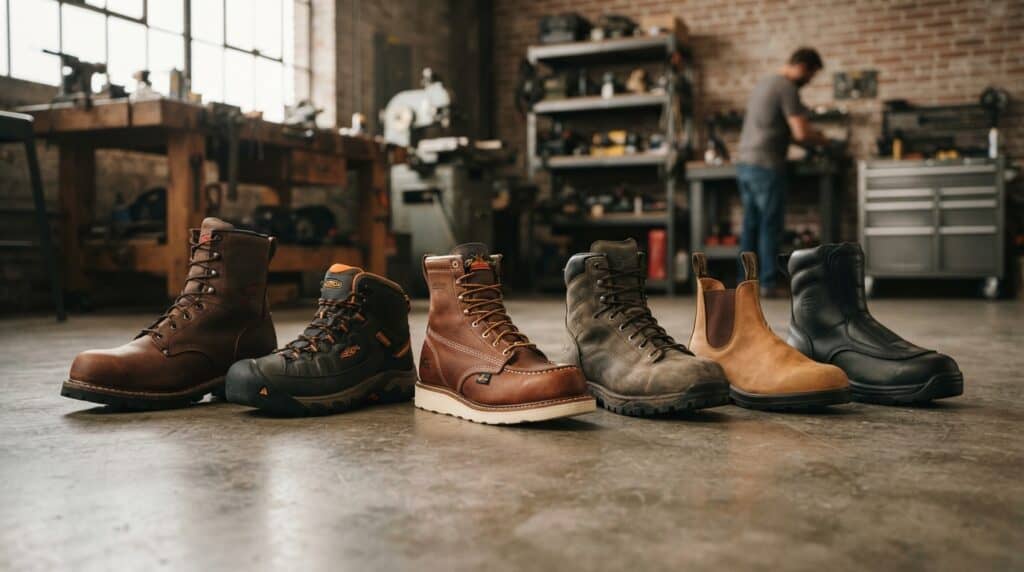
Picking work boots isn’t like picking sneakers. The wrong choice doesn’t just mean sore feet — it can mean a safety violation, a foot injury, or replacing a $150 pair after three months because they weren’t built for what you actually do. Here’s how to choose without guessing.
Start With Your Job, Not the Boot
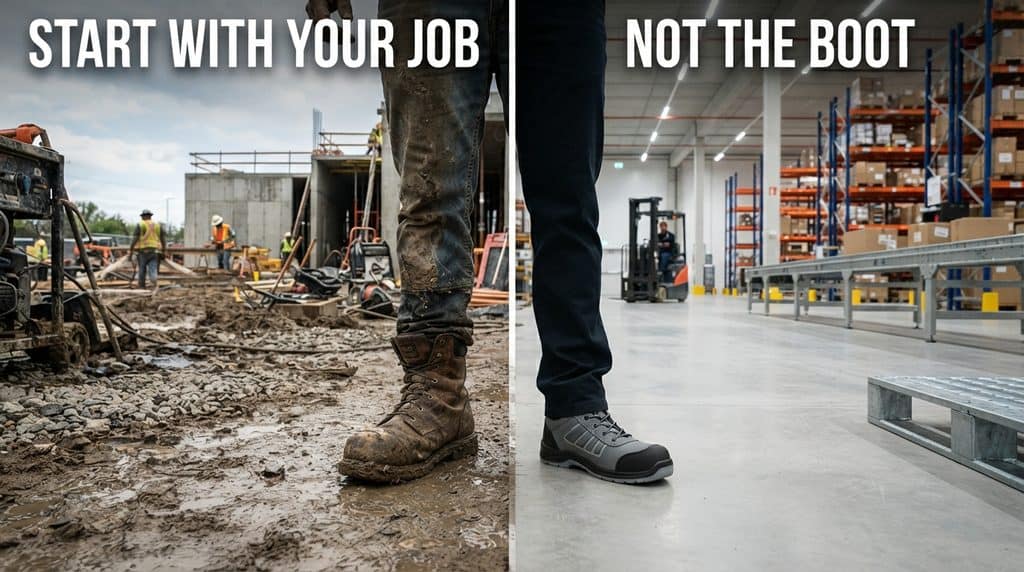
Before you look at a single model, answer this: what’s actually going to hurt you or wear out your boots on a normal day?
- Dropping or rolling heavy objects on your feet (construction, warehouse, manufacturing) → you need a protective toe cap
- Live electrical exposure (electricians, utility work) → you need EH (electrical hazard) rated boots
- Wet, muddy, or snowy conditions (landscaping, ranch work, outdoor construction) → waterproofing matters more than almost anything else
- Standing on concrete for 10+ hours (warehouse, retail, factory floors) → cushioning and arch support outrank durability features
- Oil, chemicals, or slick surfaces (mechanics, food service, industrial) → slip resistance and chemical-resistant soles are non-negotiable
- Punctures from nails, debris, or sharp material (framing, demolition, roofing) → a puncture-resistant plate in the sole matters
Most people buy boots backwards — picking a boot they like the look of, then checking if it happens to fit their job. Flip that order.
Toe Protection: Steel, Composite, or Soft?
- Steel toe: Cheapest, strongest impact protection, but heavier and conducts temperature (cold in winter, hot in summer)
- Composite toe: Lighter, doesn’t conduct cold/heat, meets the same ASTM impact standards as steel in most cases, but can be bulkier for the same protection level
- Alloy toe: A middle ground — lighter than steel, smaller profile than composite, similar protection
- Soft toe: No added protection — fine for light-duty or non-hazard work, not for job sites requiring OSHA-compliant footwear
If your job requires certified protection, check the boot’s ASTM F2413 rating on the box or product page — don’t assume “steel toe” always means it meets current safety standards.
Waterproof vs. Water-Resistant
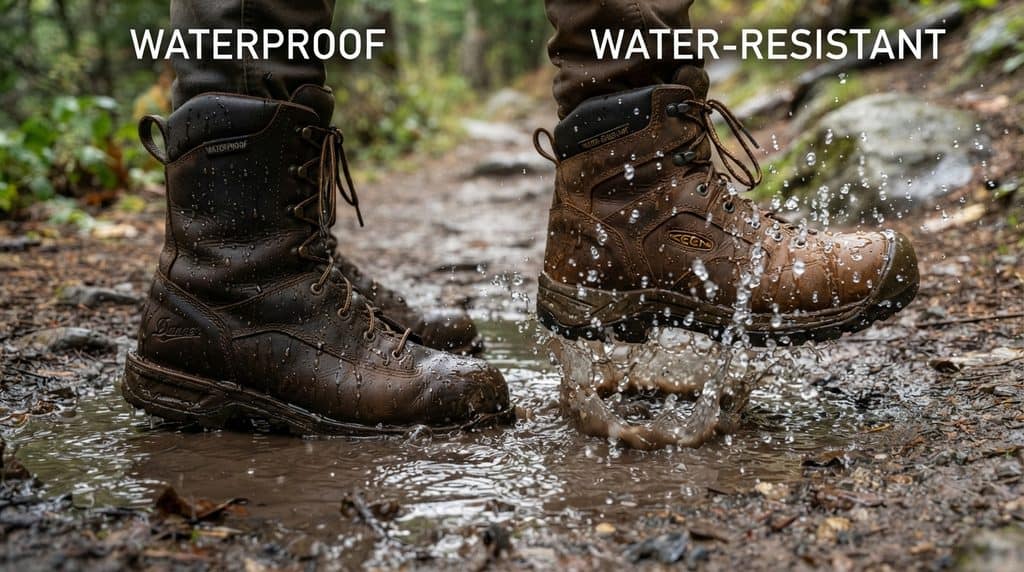
These are not the same thing, and manufacturers aren’t always clear about it.
- Waterproof usually means a membrane (like Gore-Tex or a proprietary equivalent) that keeps water out even in sustained wet conditions
- Water-resistant usually means treated leather that holds up to light rain or splashes but will eventually let water through in sustained exposure
If you work outdoors in rain, snow, or standing water, pay for genuinely waterproof construction. If you’re mostly indoors with occasional exposure, water-resistant leather is often enough — and breathes better.
Don't Ignore Comfort Features
Safety features get all the attention, but the boots people actually keep wearing (instead of replacing after two months) usually have:
- A cushioned or shock-absorbing footbed
- A supportive shank (fiberglass or steel) if you’re on uneven ground
- Enough room in the toe box — tight toe boxes are the single most common complaint in owner reviews across almost every brand
Budget Reality
Cheap boots that fail in six months usually cost more per year than a mid-range pair that lasts three years. That said, expensive doesn’t automatically mean better for your specific job — a $300 Goodyear-welted boot is overkill if you’re on light-duty warehouse work, and a $90 boot might be genuinely fine if it’s not your only pair.
A rough framework:
- Occasional/light use: $80–130 range is usually fine
- Daily, moderate-duty work: $130–200 gets you real durability
- Daily, heavy-duty or hazardous work: $200+ is often justified, especially if resoleable (Goodyear welt) construction extends the life of the boot for years
The Fastest Way to Avoid a Bad Purchase
Before buying, search for the specific model plus “review” on Reddit or a retailer’s verified-purchase reviews, and look specifically for complaints about your priority (waterproofing failing early, toe box too narrow, sole separating). Marketing copy will tell you what a boot is supposed to do. Owner reviews after 6–12 months of wear tell you what it actually does.